7 Book Cover Mistakes That Kill Your Amazon CTR (And How to Fix Them)
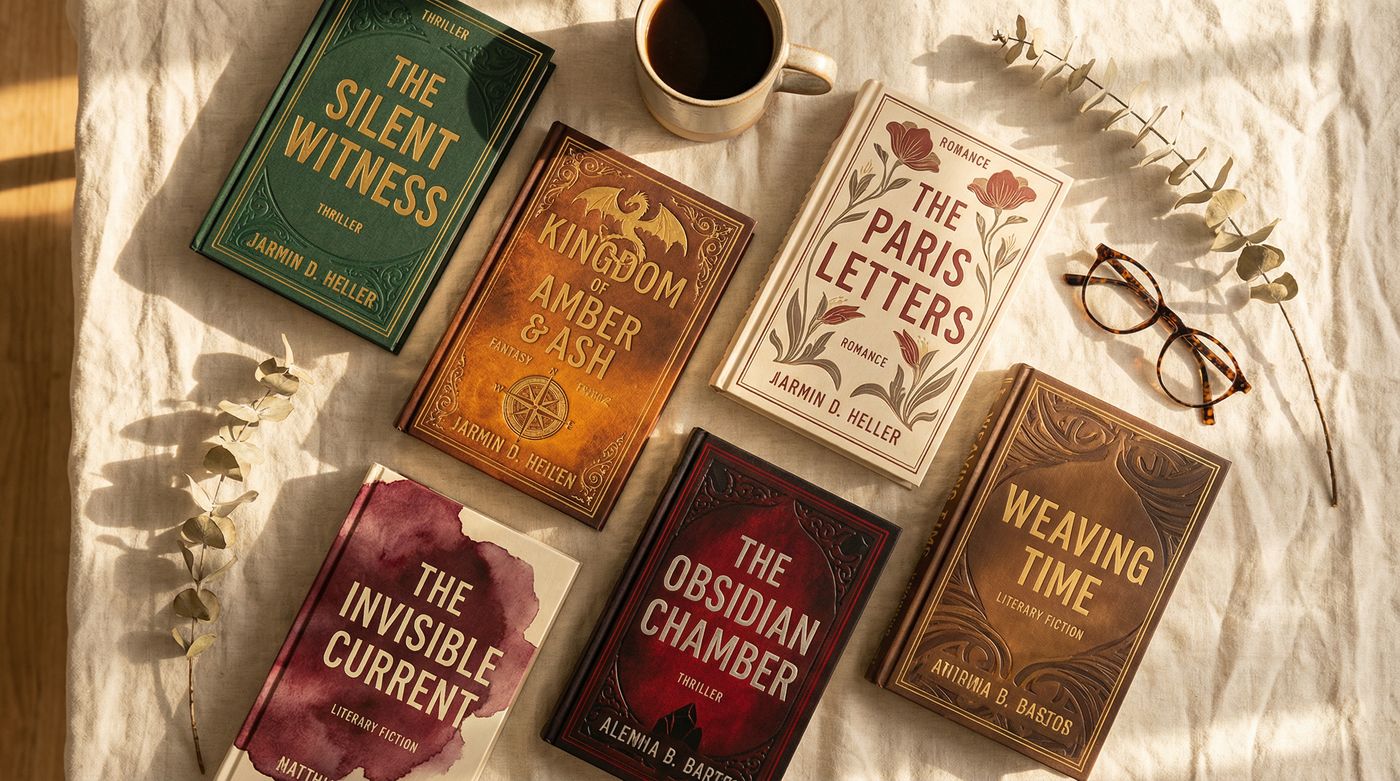
Your cover has a split second to stop a reader mid-scroll. Most indie authors are losing that battle — not because their writing is bad, but because their cover is making one of these seven fixable mistakes.
The Split-Second Window
Readers decide whether to click on a book cover very quickly. Your cover isn't being studied — it's being felt.
In that moment, your cover needs to communicate genre, tone, quality, and intrigue. Most indie covers fail at one or more of these. Here are the seven most common reasons why.
Mistake 1: The Title Is Unreadable at Thumbnail Size
This is the most common and most damaging mistake. Your cover looks beautiful at full size — but shrink it to 80×120 pixels (the size it appears in Amazon search results) and the title becomes illegible.
The fix: Test every cover at thumbnail size before finalising. The title must be readable. If it isn't, increase the font size, increase the contrast between the title and background, or simplify the background behind the title.
Mistake 2: Wrong Genre Signals
Every genre has a visual language built up over decades of publishing conventions. Readers have internalised these conventions without consciously knowing it. When your cover sends the wrong genre signals, readers scroll past — not because they don't like your cover, but because it doesn't match what they're looking for.
The fix: Study the top 20 bestselling covers in your specific sub-genre. What colour palettes do they use? What typography? What imagery? Your cover doesn't need to copy these — but it needs to speak the same visual language.
Mistake 3: Too Many Focal Points
The most effective covers have one dominant visual element that the eye goes to immediately. Many indie covers try to show too much — the hero, the villain, the setting, the magic system, the love interest. The result is a cover that the eye doesn't know where to land.
The fix: Identify the single most important visual element of your cover and make everything else subordinate to it. If you can't decide what that element is, that's a sign your cover concept needs rethinking.
Mistake 4: Stock Photo Obviousness
Readers have seen the same stock photos on many covers. When they recognise a stock image, it signals low production value — even if the overall design is good.
The fix: Use stock photos as a starting point, not a final answer. A good designer will manipulate, composite, and relight stock images until they're unrecognisable. If your cover looks like a stock photo with text on top, it needs more work.
Mistake 5: Author Name Bigger Than the Title
Unless you're a household name (James Patterson, Nora Roberts), your author name should be significantly smaller than your title. A large author name on an unknown author's cover reads as amateur — it signals that the author, not the book, is the selling point.
The fix: Make your title the dominant typographic element. Your author name should be present but clearly secondary. As your readership grows, you can gradually increase the relative size of your name.
Mistake 6: Colour Palette Mismatch
Colour communicates emotion and genre before a reader reads a single word. A warm, sunny colour palette on a dark thriller. A muted, desaturated palette on a high-energy romance. These mismatches create cognitive dissonance that makes readers uncomfortable — and they scroll past.
The fix: Choose your colour palette based on the emotional register of your book and the conventions of your genre. When in doubt, study what's working in your sub-genre's bestseller list.
Mistake 7: Testing With the Wrong People
This isn't a design mistake — it's a process mistake. Authors who test their covers with their writing group, their social media followers, or their family are getting systematically biased feedback. These people want to support you. They're not your target reader.
The fix: Test with genre-matched readers who have no prior relationship with you. These are the people who will encounter your cover cold in an Amazon search result — and their reaction is the only one that predicts sales.